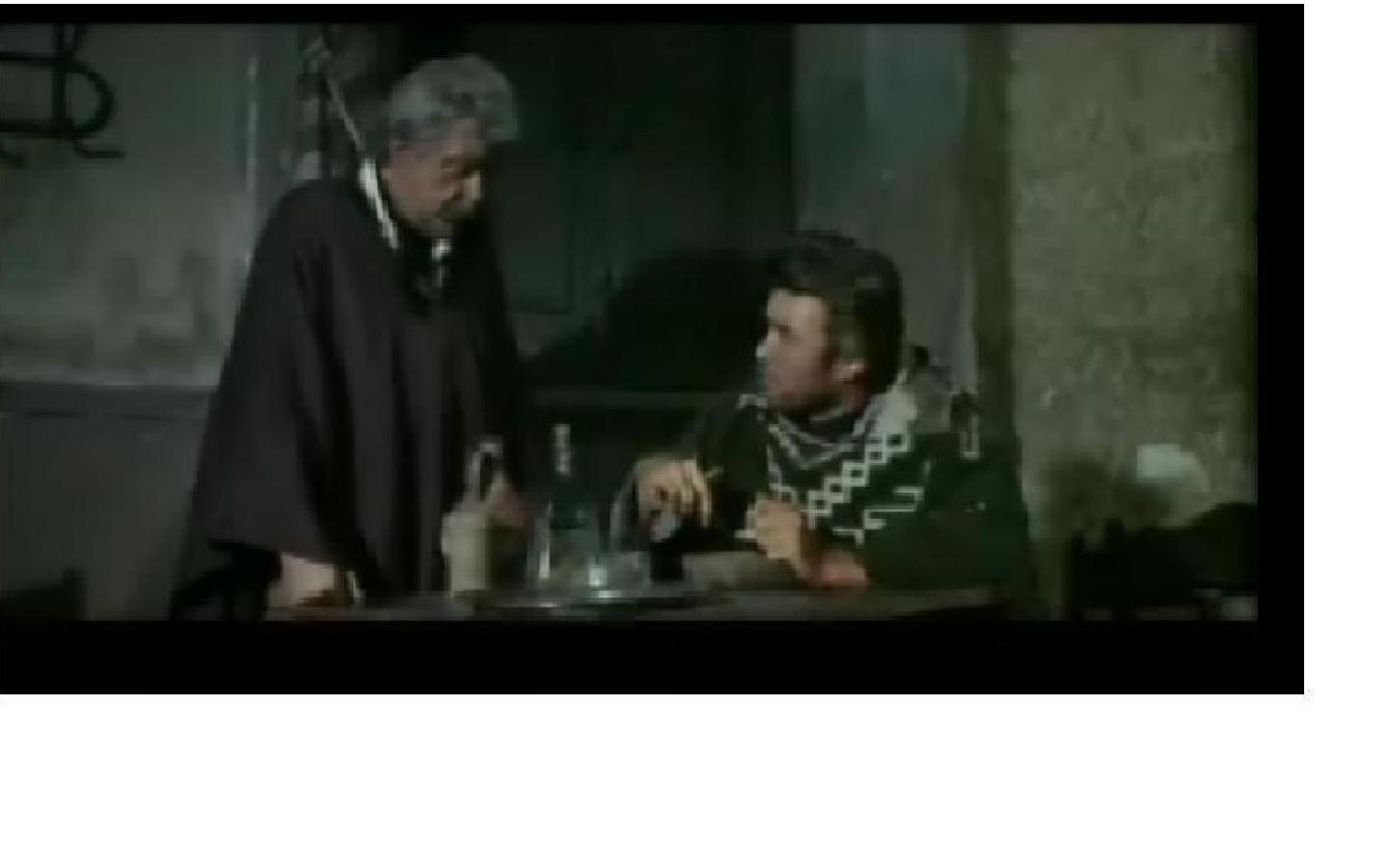
Il Vento Fa Il Suo Giro
Nestled in the Italian Alps, the historic and native language, Occitan, has persevered against time and the threats of modernity. It is said that languages are in a constant state of evolution with the exception of those languages that become static. If one looks at the rich literary history and spoken popularity of Occitan, it becomes evident why the Occitan descendants today feel impelled to do whatever necessary to protect their language and way of life. The factors that contribute to the survival of a linguistic minority like Occitan can be truly analyzed once one looks beyond the language as a basic form of communication. A language like Occitan has greater odds of surviving when its people protect its best interest. Language is indicative of a culture: it embraces specific values, ways of life, and most importantly, a sense of community. Exemplary of the cultural ties to language is the film Il Vento Fa Il Suo Giro. It is a film about language; however, in order to appreciate the artistic and provocative qualities of the film, one needs to separate the notion of grammar and syntax from the concept of language and instead, concentrate on its speakers.
The film tells the story of the quiet and desolate mountain town, Chersogno, inhabited by a small population of Occitan descendents. Protective of their language and culture, the villagers are reluctant to share their way of life with newcomers, with the exception of the summer tourists that flock to the town once a year to marvel at the serenity and beauty of the Piedmont region. The locals of Chersogno are taken by surprise when a mysterious Frenchman stumbles upon the village during the solitary months of winter. Enticed by the town’s seclusion and its vast landscape, shepherd Philippe Heraud, believes he has found the ideal spot to bring his family and herd of goats to continue his artesian cheese making. After inquiring about a home to rent, Philippe must await the communal decision of the Chersogno townspeople to determine if he and his family will be welcomed into the intimate yet selective community. While the ‘sindaco’, or town mayor, encourages the townspeople to embrace the newcomer’s arrival, many are still skeptical. Reluctantly, the villagers agree to allow the Frenchman and his family to settle in their village with the hope that Philippe’s pastoral practices will attract tourism to their dying town. Despite the initial kindness of the Chersogno people, Philippe learns quickly that tolerance is not synonymous with acceptance.
A Sense of Community
Before the arrival of the Heraud family, the people of Chersogno come together in an amazing act of solidarity to perform a ‘rueido’. A tradition dating back to the Second World War, a ‘rueido’ is when a community comes together to help out one individual for the good of others. While the men work to collectively restore the house that has been rented to Philippe, the women come together to prepare homemade pasta and other local cuisine in anticipation of the Heraud’s arrival. Their preparations are a collaborative effort, but what unites the Chersogni in the rueido is language. Not only do we see the men and women speaking Occitan while working, but the Occitan language prevails during all community affairs. From political discourse regarding the town’s future to the rueido to festivals, the Occitan language serves as a familiar and intimate means of communication. The sense of community seen in the film must also be considered in terms of its negative connotations. When Emma, one of the town’s eldest members, has an altercation with Philippe, she distorts the details of the story to the town, and paints a violent picture of Philippe. Not knowing the facts of the story, many townspeople come together to support Emma because their allegiance is to one of their own kind. A group of undisclosed villagers even go so far as slaughtering two of Philipp’s goats. Another example of a negative sense of community can be seen when many of the locals unite in making false claims to the local health department about Philipp’s supposed unsanitary living and working conditions. Despite Philippe’s persistence and positive attitude, the multitude of conflicts between the village and his family eventually force him away.
A Sense of Community
Before the arrival of the Heraud family, the people of Chersogno come together in an amazing act of solidarity to perform a ‘rueido’. A tradition dating back to the Second World War, a ‘rueido’ is when a community comes together to help out one individual for the good of others. While the men work to collectively restore the house that has been rented to Philippe, the women come together to prepare homemade pasta and other local cuisine in anticipation of the Heraud’s arrival. Their preparations are a collaborative effort, but what unites the Chersogni in the rueido is language. Not only do we see the men and women speaking Occitan while working, but the Occitan language prevails during all community affairs. From political discourse regarding the town’s future to the rueido to festivals, the Occitan language serves as a familiar and intimate means of communication. The sense of community seen in the film must also be considered in terms of its negative connotations. When Emma, one of the town’s eldest members, has an altercation with Philippe, she distorts the details of the story to the town, and paints a violent picture of Philippe. Not knowing the facts of the story, many townspeople come together to support Emma because their allegiance is to one of their own kind. A group of undisclosed villagers even go so far as slaughtering two of Philipp’s goats. Another example of a negative sense of community can be seen when many of the locals unite in making false claims to the local health department about Philipp’s supposed unsanitary living and working conditions. Despite Philippe’s persistence and positive attitude, the multitude of conflicts between the village and his family eventually force him away.
Conflict
Throughout the film, disharmony and conflict play a major role in the storyline. At times, these conflicts are justified while at other times, they’re invented to create disharmony. Interestingly, conflict is mainly limited to interactions between Philip’s family and the townspeople. Although we see disagreement at political meetings or contrary attitudes concerning the best interest of the town, there is almost a utopian quality about the town and its people. It is only when they feel threatened by the presence of “the foreigner” that true conflict arises. If we take into account the various conflicts throughout the film, the first true conflict concerns boundaries. When Emma is concerned that Philippe’s herd is grazing on her land she reprimands him (in Occitan) for not having control over his animals. What seems to be a petty trifle over where Philippe’s goats are allowed to graze is actually a metaphor for the invisible boundaries created by its villagers designed to keep people out. Initially, there are the goats that cross the invisible lines of physical property, but ultimately during a succession of other conflicts, it is “the foreigner” that crosses boundaries and invades the villagers’ space. By the end of the film, we learn that the space which Philippe and his family invade is actually the space of a foreign cul
 ture; a culture set in its ways and unwilling to open its door to the possibilities of change.
The Title
I think it is important to end with a comment or two regarding the title of the film since it is mentioned at the opening and ending scenes. Il Vento Fa Il Suo Giro, or “The Wind Blows Around” can undisputedly be interpreted in many different ways. When I think of wind’s capability and capacity, I’m reminded of turbulence, commotion, and unease; however, once the wind stops blowing, calmness is restored. Like life, there are periods of chaos and confusion like there are periods of tranquility and serenity. There is always a balance. While in the film, the Heraud family blows in and as a result, the people of Chersogno collectively experience the metaphorical damage of a windy storm, the wind eventually softens and the village returns temporarily to a peaceful state. In order for the villagers of Chersogno to maintain a peaceful state, they must learn to live side by side with the “foreigner” or risk a constant state of upheaval and chaos; A state of upheaval that would ultimately contradict the peace and beauty of their surroundings.